Much of a tropical forest’s life happens high above the ground – in the canopy, where leaves, flowers and fruits are produced and where many insects, birds, primates, epiphytes and lianas live. Yet most of what we know about African forests has been learned from the forest floor. Our canopy research programme is changing that by training African scientists to climb, equipping them, and putting their new skills to work on research and conservation.
Closing Africa’s canopy research gap
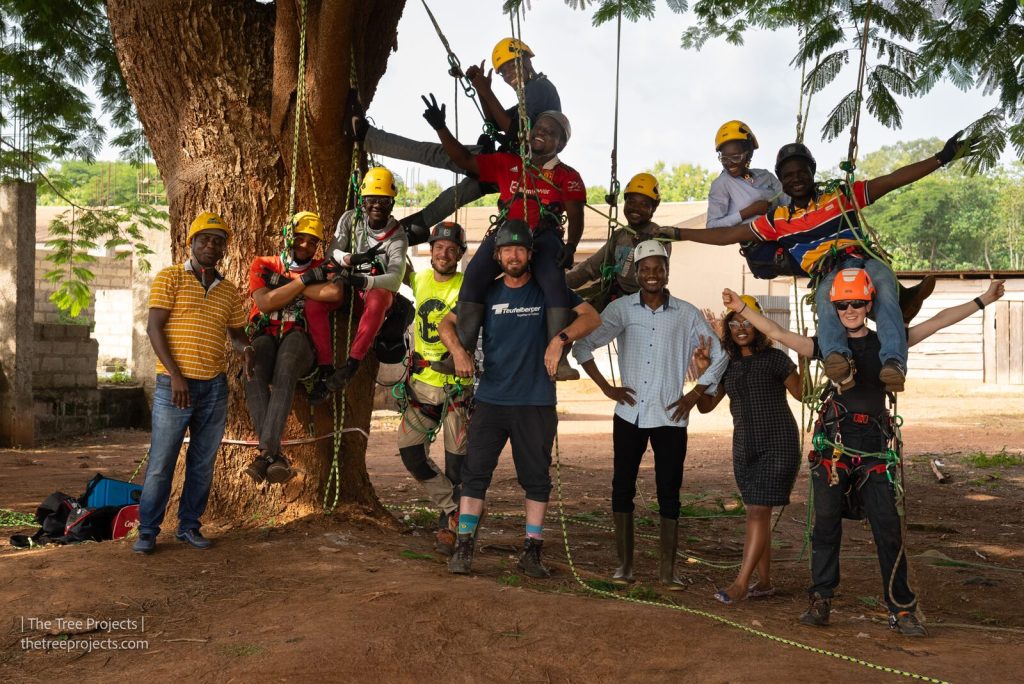
Rope access techniques are cheap, low-impact and can reach almost any tree, which makes them ideal for canopy research. But in Africa, canopy work has mostly been led by visiting teams who leave with the skills and the gear – a pattern often called “parachute science”. Our approach is different: train local researchers, and leave the equipment behind so the work can continue.
Tree climbing training
Working with expert trainers from The Tree Projects (Tasmania), Sylvana Alta (Tübingen) and Everydayarbor (Newcastle, Australia), we have run tree climbing workshops at UENR, Sunyani:
- 2024: ten early career researchers from Ghana trained in rope access techniques, with four complete sets of climbing equipment donated to UENR.
- 2025: eleven participants from Ghana, Guinea, Gabon and Rwanda trained, about USD 6,000 of scientific equipment donated, and more than 100 students taken into the canopy at an open session.
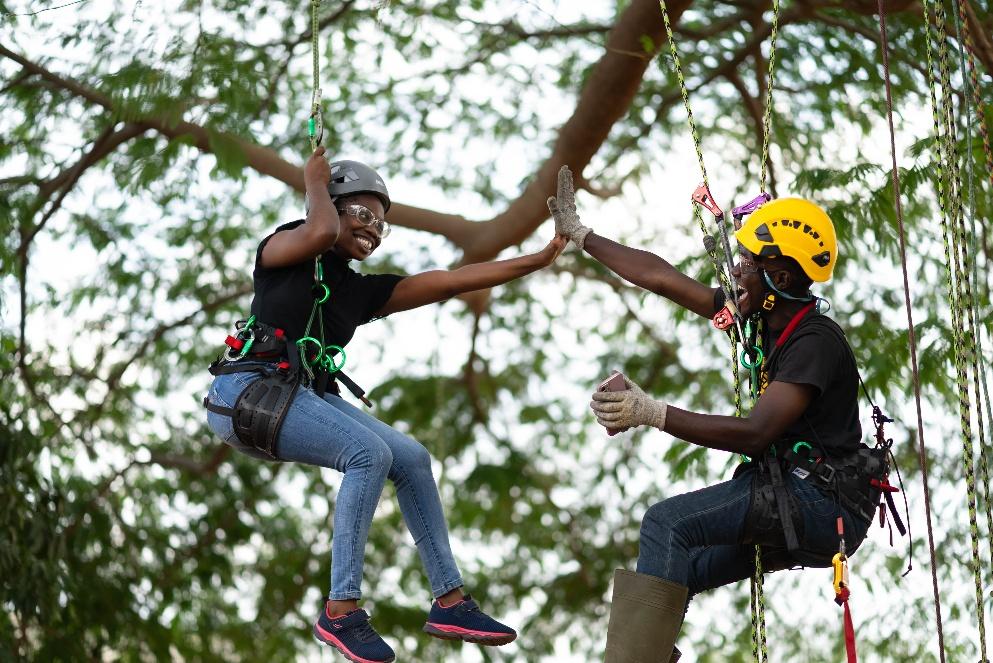
Training covers visual tree assessment, knots and hitches, static and moving rope techniques, rescue rigging, safety planning, and mounting scientific instruments in the canopy.
Research in the canopy
Our climbers are already using their skills for research:
- Canopy phenology cameras photograph leaves, flowers and fruits in forest crowns every day, building a long-term record of how tropical forest phenology responds to climate.
- GhanaPhenoPulse, our citizen science project on Zooniverse, invites volunteers to label phenology events in these canopy images. More than 3,000 volunteers have taken part – anyone can join.
- Students are studying epiphytes and parasitic plants, ant species from the forest floor to the crown, and habitat quality for primates, and deploying acoustic recorders in the canopy.
See the canopy for yourself – volunteer with GhanaPhenoPulse
You don’t need a harness to explore the canopy. On GhanaPhenoPulse, our citizen science project on Zooniverse, you can browse images from our canopy cameras and label when trees are leafing, flowering and fruiting. Every label helps us understand how Ghana’s forests respond to climate change. It takes only a few minutes, and anyone can join.
Climbing for conservation: the giants of Atewa
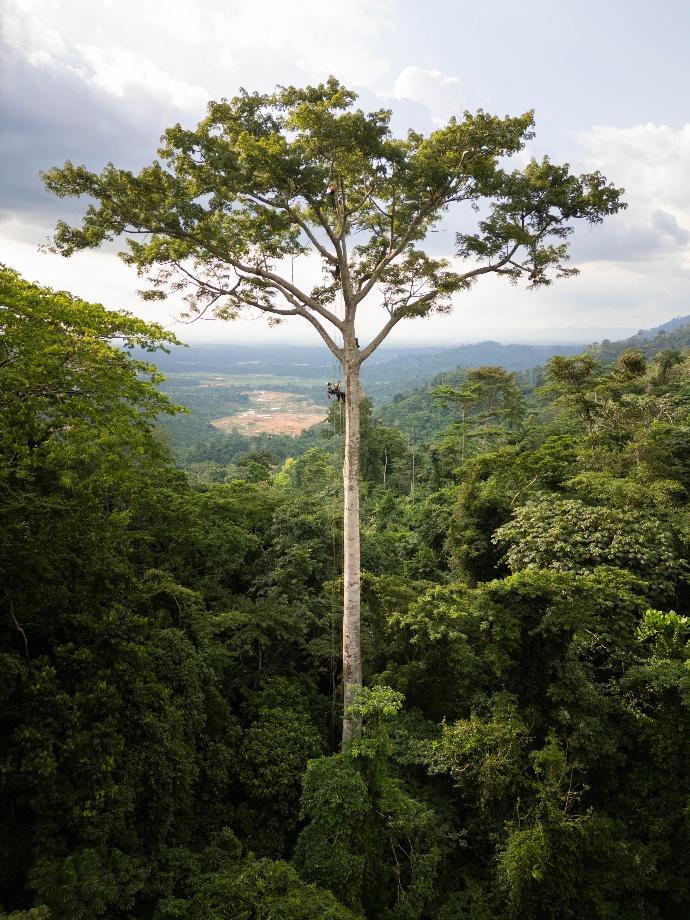
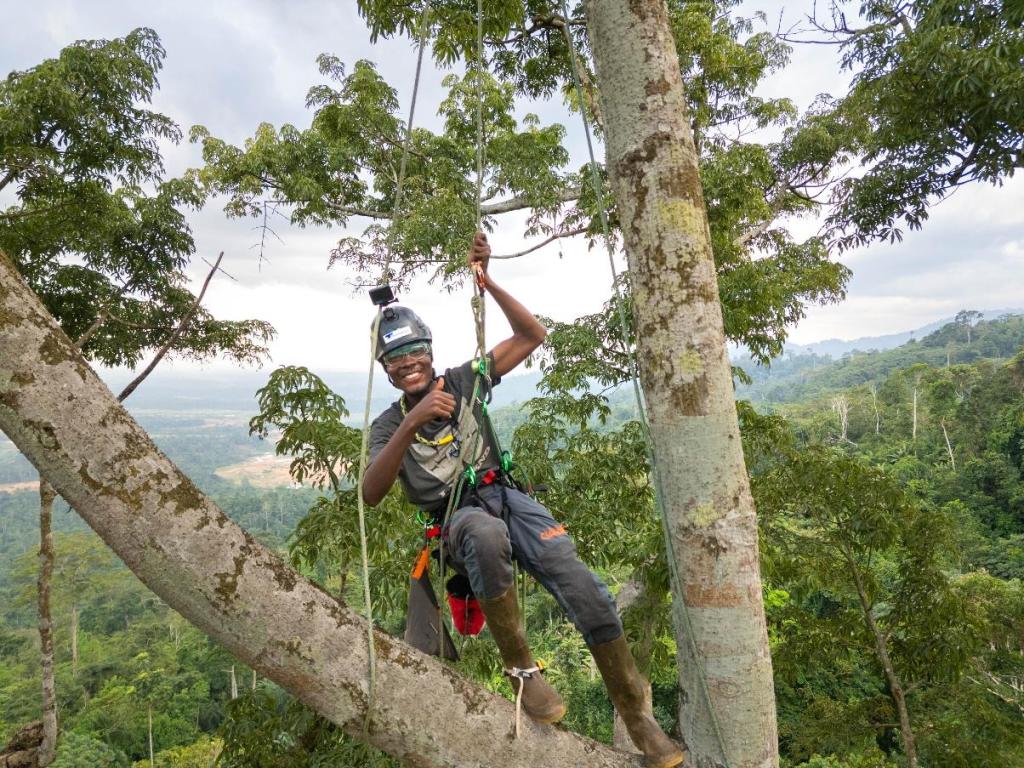
In April 2025, with A Rocha Ghana, our climbers measured emergent trees in Atewa Forest Reserve, including a 59.65 m Ceiba pentandra – the tallest known tree in Atewa. Measuring and mapping giant trees helps make the case for protecting them.
Read more
- Blog: Opening Africa’s Canopy: Our Tree Climbing Workshop in Sunyani (2024)
- Blog: Back in the Canopy: Our Second Tree Climbing Workshop (2025)
- Blog: The Giants of Atewa: Measuring Ghana’s Tallest Known Trees
- Report: Enhancing Canopy Research in Africa: Insights from Tree Climbing Workshop in Ghana (2024)
- Report: Tree Climbing for Research and Conservation: A Report on the 2nd Tree Climbing Workshop (2025)
- Video: Ghana Tree Climbing Training (2024) and Tree Climbing for Research and Conservation (2025)
Interested in canopy research or training? Get in touch.

